
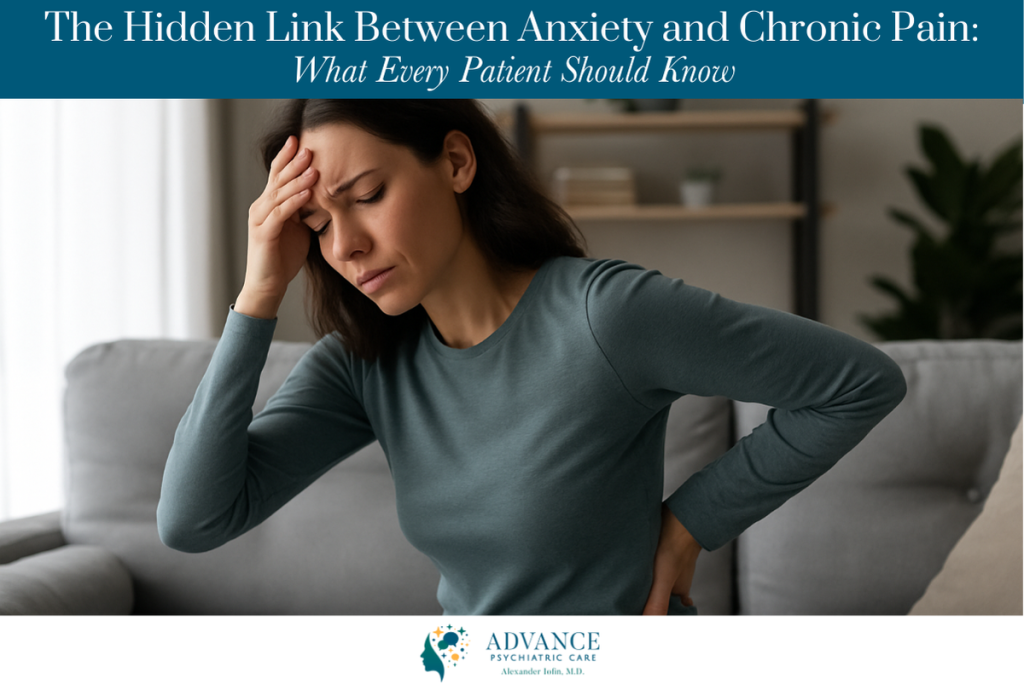
For many people, the connection between body and mind is more powerful than they realize. Anxiety, one of the most common mental health conditions, often goes hand-in-hand with chronic pain disorders. Whether it’s persistent back pain, headaches, or fibromyalgia, patients frequently struggle with both physical discomfort and overwhelming worry or stress.
At Advance Psychiatric Care, we believe in treating the whole person, not just the symptoms. Understanding the hidden link between anxiety and chronic pain can open the door to more effective, long-lasting treatment.
How Anxiety and Chronic Pain Are Connected
- Shared pathways in the brain: Anxiety and pain share common brain circuits and chemical messengers, such as serotonin and norepinephrine. This overlap explains why one condition can worsen the other.
- Stress response: Anxiety triggers the body’s stress response, tightening muscles and increasing inflammation, which amplifies pain.
- Cycle of suffering: Chronic pain causes worry about health, work, and relationships—fueling anxiety. In turn, anxiety increases muscle tension and sensitivity to pain.
Studies show that up to 60% of people with chronic pain also experience anxiety or depression. Left untreated, this combination can seriously reduce quality of life.
Integrated Psychiatric Care: A Path to Healing
At Advance Psychiatric Care, our providers use a comprehensive approach that addresses both the physical and emotional components of chronic pain and anxiety. Treatment options may include:
- Medication management for both anxiety and pain-related symptoms.
- Psychotherapy (CBT & mindfulness-based therapy) to retrain the brain’s response to pain and reduce worry.
- Lifestyle support including sleep improvement, relaxation training, and stress management.
- Collaborative care with pain specialists and primary care physicians for well-rounded treatment.
Q&A: Understanding Anxiety and Chronic Pain
Q: Can anxiety really make my pain worse?
A: Yes. Anxiety increases muscle tension, stress hormones, and nerve sensitivity, all of which can intensify pain signals.
Q: If I treat my anxiety, will my pain improve?
A: Often, yes. Many patients find that when their anxiety is well-managed, their pain becomes less intense and easier to cope with.
Q: What types of therapy work best for anxiety and chronic pain?
A: Cognitive Behavioral Therapy (CBT), mindfulness-based stress reduction, and supportive psychotherapy are highly effective. These help reframe negative thoughts, reduce stress, and improve coping skills.
Q: Is medication always necessary?
A: Not always. Some patients benefit from therapy and lifestyle changes alone. Others may need a combination of medication and therapy for best results. Treatment is always personalized.
Q: How do I know if I should seek psychiatric help?
A: If you find your pain is affecting your mood, or your anxiety is making it harder to function day-to-day, it’s time to consider psychiatric care.
Takeaway
The relationship between anxiety and chronic pain is complex, but you don’t have to suffer in silence. With integrated care, patients can experience relief in both mind and body, reclaiming a higher quality of life.
If you or a loved one is struggling with anxiety and chronic pain, we encourage you to reach out to our compassionate team.
Contact Advance Psychiatric Care
📍 Neptune Office
444 Neptune Blvd, Suite #17
Neptune, NJ 07753
📞 (732) 528-3232
🕘 Monday – Friday: 9:00am – 5:00pm
📍 Toms River Office
554 Commons Way, Building E Toms River, NJ 08755
📞 (732) 528-3232
🕘 Monday – Friday: 9:00am – 5:00pm