
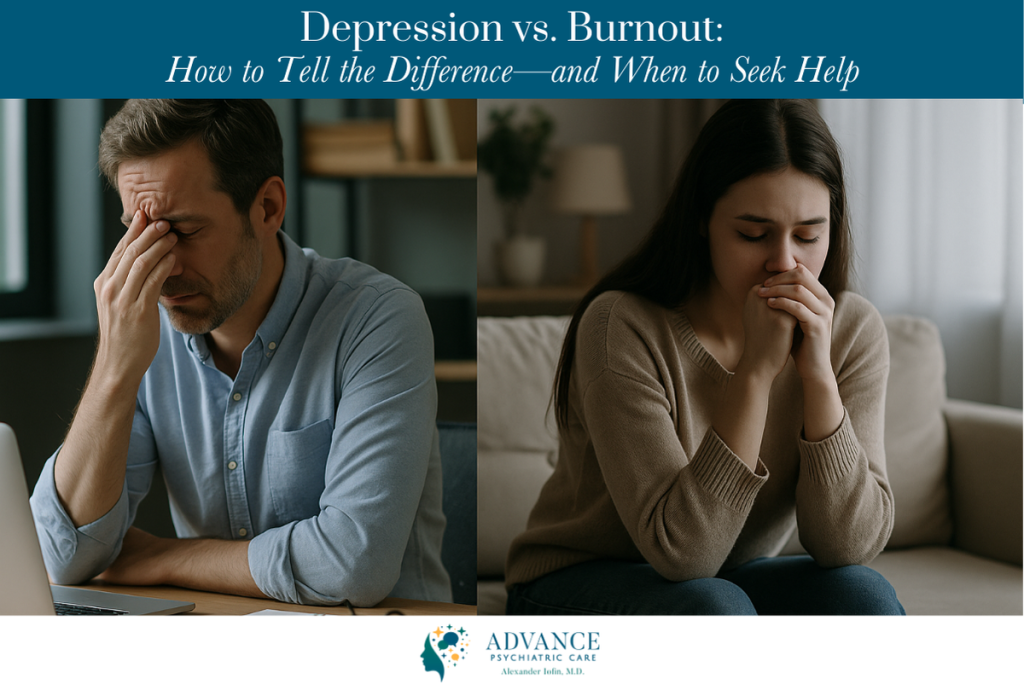
In today’s fast-paced world, many working adults feel drained, overwhelmed, and mentally exhausted. But when does “just stress” cross the line into something more serious? Understanding the difference between depression and burnout is essential for knowing when—and how—to seek help.
At Advance Psychiatric Care, we support patients in Neptune and Toms River who are struggling with both mood disorders and work-related stress. Here’s what you need to know.
What Is Burnout?
Burnout is a state of emotional, physical, and mental exhaustion caused by prolonged stress, often related to work or caregiving responsibilities. It’s not a medical diagnosis but is widely recognized as a real and serious condition.
Common signs of burnout include:
- Constant fatigue, even after rest
- Loss of motivation at work
- Feeling detached or cynical about responsibilities
- Difficulty concentrating
- Headaches, stomach issues, or sleep disturbances
What Is Depression?
Depression, or major depressive disorder, is a clinical mental health condition that affects mood, thoughts, and daily functioning. Unlike burnout, depression can develop with or without external stressors and often requires medical treatment.
Common signs of depression include:
- Persistent sadness or emptiness
- Loss of interest in hobbies and relationships
- Changes in appetite or sleep patterns
- Feelings of worthlessness or hopelessness
- Difficulty functioning in daily life
- Thoughts of self-harm or suicide
Key Differences Between Depression and Burnout
While they overlap, here are some important distinctions:
● Source of the problem
- Burnout: Usually tied to work or caregiving stress.
- Depression: Can occur without an obvious trigger.
● Scope of symptoms
- Burnout: Primarily affects motivation and energy, often linked to job performance.
- Depression: Affects all areas of life, including relationships and self-esteem.
● Recovery
- Burnout: Often improves with rest, lifestyle changes, or a break from stressors.
- Depression: Usually requires professional treatment, such as therapy and/or medication.
Q&A: Depression vs. Burnout
Q: Can burnout turn into depression?
A: Yes. If burnout goes unaddressed, it can progress into depression. That’s why early recognition and intervention are so important.
Q: How do I know if I should see a professional?
A: If your low mood or exhaustion persists for more than two weeks, if you’ve lost interest in things you usually enjoy, or if your symptoms are interfering with work, relationships, or self-care, it’s time to seek help.
Q: What treatments are available for depression and burnout? A: At Advance Psychiatric Care, we provide:
- Psychiatric evaluations to determine whether you’re experiencing depression, burnout, or both
- Medication management for patients who may benefit from antidepressants or other treatments
- Therapy and counseling referrals to help you develop coping strategies
- Lifestyle support to improve sleep, stress management, and overall wellness
Q: Is it possible to recover from both?
A: Absolutely. With the right treatment and support, most people recover fully and regain balance in their lives.
When to Seek Immediate Help
If you are experiencing thoughts of self-harm or suicide, please call 911 or the Suicide & Crisis Lifeline at 988 right away. Help is available 24/7.
You Don’t Have to Go Through This Alone
Whether you’re facing burnout, depression, or both, the compassionate team at Advance Psychiatric Care is here to help you find relief and start feeling like yourself again.
Contact Us
Advance Psychiatric Care
📍 Neptune Office
444 Neptune Blvd, Suite #17
Neptune, NJ 07753
📞 (732) 528-3232
🕘 Monday – Friday: 9:00am – 5:00pm
📍 Toms River Office
554 Commons Way, Building E Toms River, NJ 08755
📞 (732) 528-3232
🕘 Monday – Friday: 9:00am – 5:00pm
👉 Ready to take the first step toward feeling better? Call us today to schedule a confidential consultation.